Despite your opinion about any of “the lists” it feels really nice to be seen and recognised for that thing that you do. Especially by your peers. The first World’s 50 Best Bars list was published in 2009. For us in Toronto, this was a time when great cocktails were in their infancy. When we would travel, we would always look at this list to see what bars we should visit. This is how we ended up visiting Eau de Vie in Sydney in 2015. That visit literally inspired us to start Bartender Atlas a year later. Maybe without 50 Best Bars, Bartender Atlas would never even exist.
In 2022, 50 Best launched the first North America’s 50 Best Bars list. By breaking down the world’s list, there was more room for more bars to partake, to be seen, awarded, acknowledged. In 2025 they expanded this list to include 51-100 bars – creating more space for more bars. Living in a country that is forever overshadowed by our neighbours to the south, this has been great. Considering the population of Canada is only the size of 12% of the USA and about 31% of Mexico, our bars have ranked pretty darn great on the list. What’s even more exciting is seeing bars located in smaller cities being recognised.
The word “Best” is very subjective, especially when it comes to a “best bar”. There are no strict parameters for judges when ranking their favourites in a year. Because we all like different things, different spaces and styles of service. Because what we feel is important in a bar may be different than what you feel is. Our differences in opinion are what make life so interesting – and the same goes for the list every year.
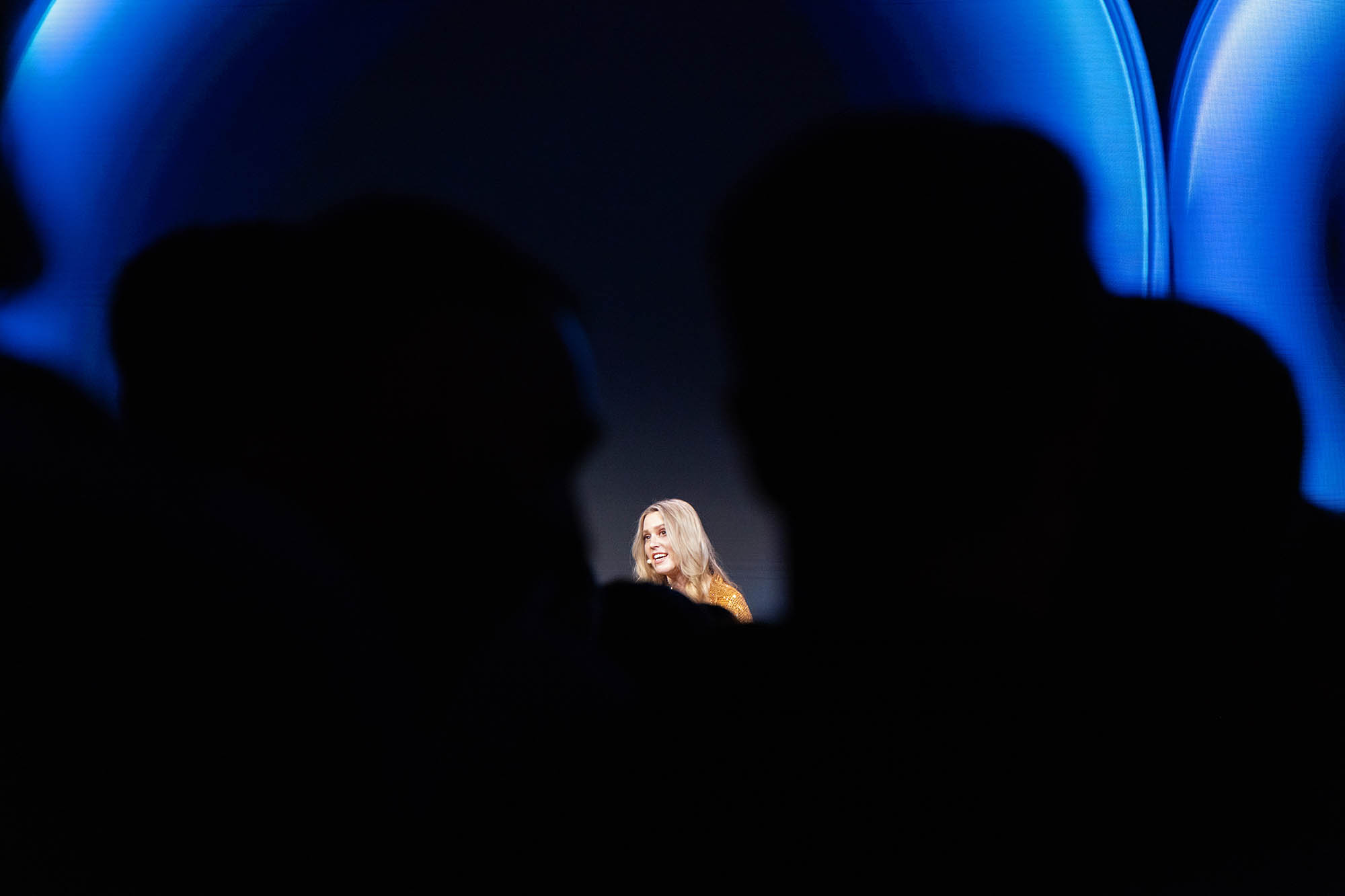
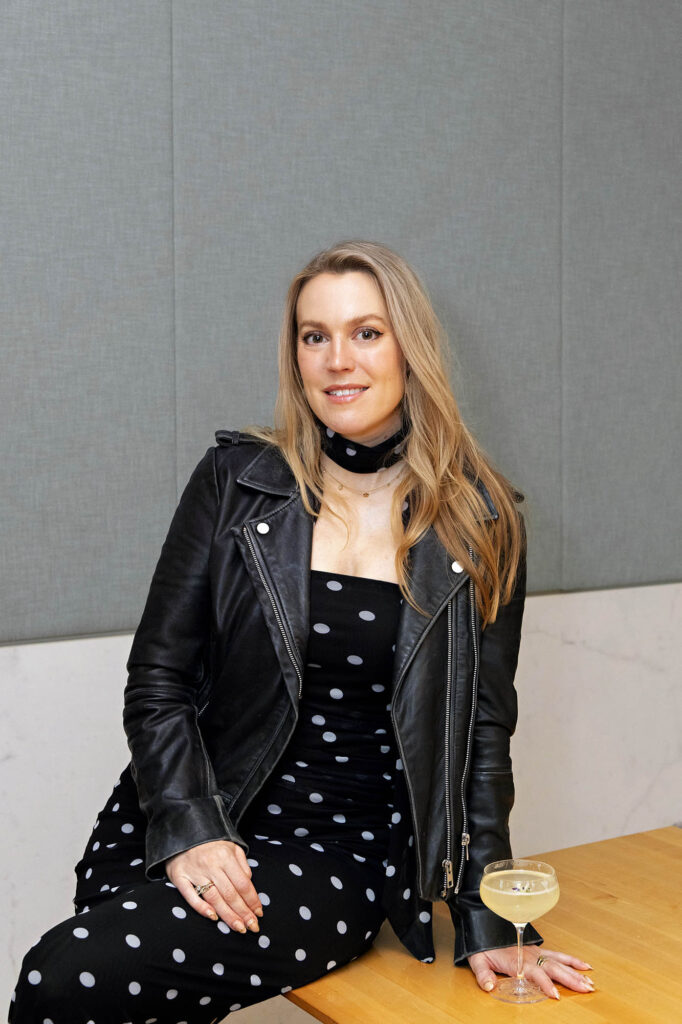
At the Closing Party for this year’s North America’s 50 Best Bars, we had the chance to sit down with Director of Content & Creative 50 Best, Emma Sleight, to chat more about her role, the list and her history in the industry.
Bartender Atlas: Can we start with a little bit of history? What was your pathway to getting this job?
Emma Sleight: I always say my career has always been around telling stories. That’s what I’ve always been most interested in. Both meeting people and hearing their stories but also finding a way to tell them in interesting ways to people. I wanted to be a newsreader originally. So I studied broadcast journalism after University and then…it was in the day of unpaid journalism, so I was doing the “work experience dance” all around for travel mags and at BBC, news broadcasting at The Guardian. I was at Time Out. I had a books column in Time Out where I would visit weird bookshops around London and write about them. Then I quickly realized that I loved food.
So I worked as a recipe developer. I trained as a sommelier and then I went brand-side and was the head of food content at Marks & Spencer for nearly eight years. I was in charge of their photography, their social media, their celebrity partnerships, their editorial. So that was an amazing experience to work with a heritage brand. Then I went back to freelance for a few months and the job at 50 Best came up and was too good to pass up.
BA: Have you worked in bars and restaurants with your Sommelier training?
ES: No, not for those specialisms. However, my very first job was in a restaurant, which is, I mean, isn’t that everyone’s first job, usually? I think I was 14, and I worked in an Italian restaurant with a very scary Italian chef called Tiziano Tesolin.
BA: If the chef isn’t scary, isn’t he even a chef?
ES: I mean, my favourite is when… customers would order off-menu and they’d order something like a Zabaglione for pudding and you’d just hear them swearing and whisking in the back for about 20 minutes.
BA: How long have you been with 50 Best for?
ES: I’ve been with 50 Best for two and a half years now but it feels like much longer.
BA: Well, it’s a very busy organization and you work with both bars and hotels?
ES: Bars, hotels and vineyards.
BA: Is there a separate team that works on restaurants?
ES: The content team will work across everything, but we do have specialists within the team that pick up everything. So there is a restaurants dedicated side to it.
BA: Is there an aspect that you work with that you enjoy most? Like, as a trained sommelier, do you get extra excited to go to vineyards?
ES: I get extra excited to go to everything because any opportunity to travel and to meet the people behind the experiences that we talk about, that’s an extraordinary privilege. None of us take that lightly and that’s why when we go to locations our MO is often how can we work with the talent and the venues on the ground, how can we bring that to life so that the community we bring to that destination can get a deeper understanding of that place as well.
BA: Talking about how you’re very interested in the story of the people that make all this happen, is there something you personally, when you go out to bars, restaurants, vineyards – is there a specific sort of interaction that you’re looking for or a touch that someone can put on a piece of service that really makes it stand out for you, that you instantly would think, ooh, this is a bar that might be on one of our lists.
ES: Honestly, there’s not a direct correlation with what gets onto the list versus what peoples’ experiences are because the voters are all completely subjective. My experience at my best bar experience will be so different from yours to anyone else’s. So for some people the service aspect might be the most important thing. They want to be greeted at the door by name. They want to be sat down. They want to have a glass of water refreshed every five minutes but for someone else the service might not be as important and they’re just looking at the quality of the drinks program or how cool the design is. I can only speak to myself personally. I don’t look for one specific thing in a bar. I go to different places based on my mood and what I really admire about true professionals in the hospitality world is their ability to understand and recognize what mood people are in. So if you’re coming through the door and you just want to sit in a corner and have a drink and just smile, not really exchange any words and leave they can recognize that. If someone is genuinely showing interest in “What’s that ingredient ?” on a menu, you then get the people who want to engage and bring them to life and “Hey! Would you like to see the lab at the back?” I love it when it’s not a formula, but it’s something that is organic depending on who you’re speaking to.
BA: Are there any specific experiences that stick out as you “this is exactly what I needed right now”?
ES: I think I’ll give a range.
So Bar Leone, you go there when you want to have fun and you want to be in a neighbourhood hangout and you end up speaking to the person next to you. I was in FOCO in Barcelona and it was so nice just to sit at the end of the bar and Tom just kept saying, “do you want to try this drink? And do you know what? I did but it didn’t feel forced or anything like that. So I think there’s so many experiences. I was in Walt’s recently and he was just sliding a drink across saying, “I think you’ll like this.” That is just a very nice touch. So I think it’s very dependent on where you are and how it’s expressed.
BA: Do you have a vote?
ES: No. Sorry. No.
No one at 50 Best votes. None of our sponsors vote. The Academy Chairs do vote, but they’re the only public voters and their vote is worth no more than anyone else’s in the list and they also don’t see who their voters vote for. They have zero visibility of the list until it’s announced live. So it’s fundamentally important that no one at 50 Best votes because then there’s a nice separation between who we visit, how we talk about them, who we work with and the ultimate list.
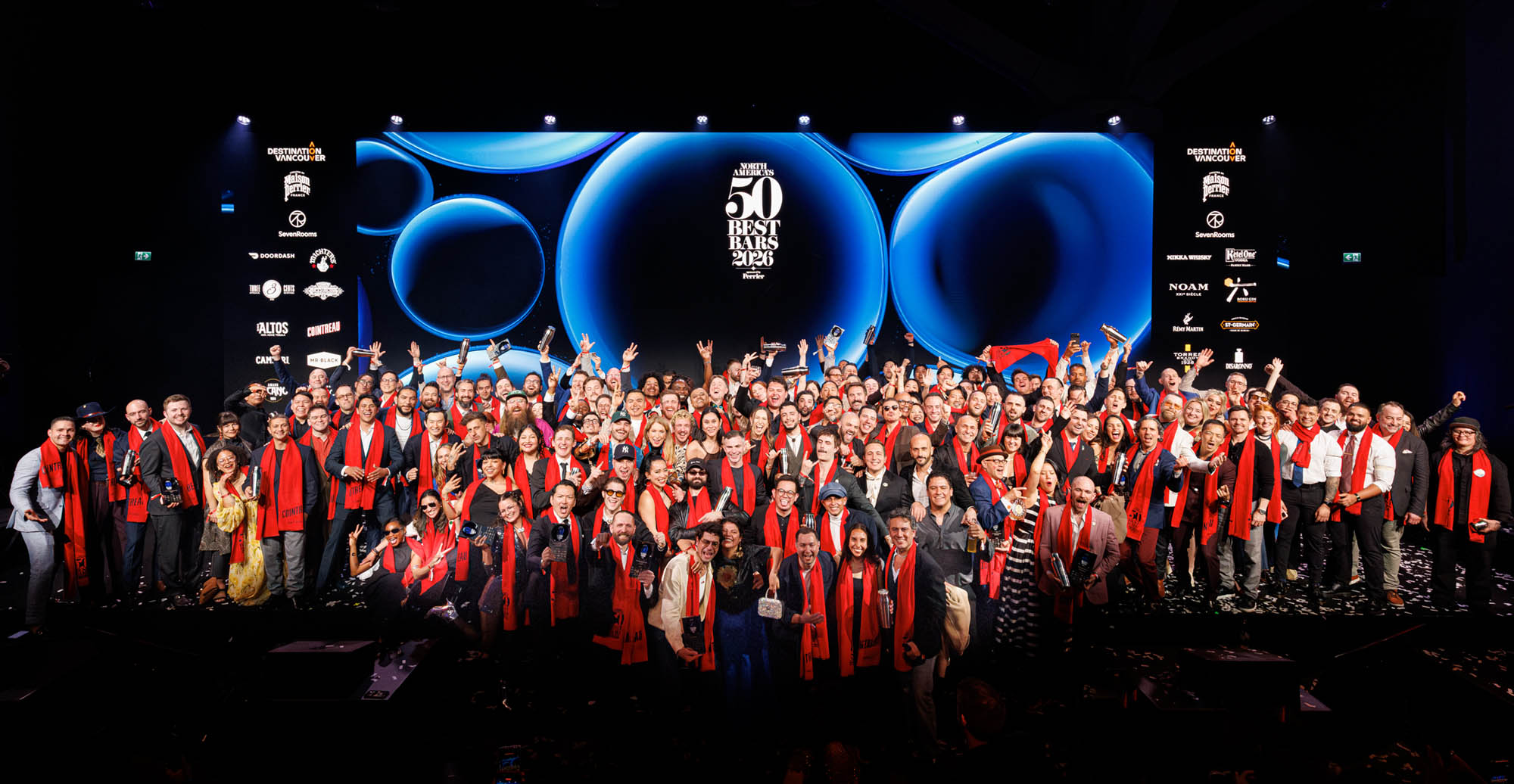
BA: Are there any surprises on this year’s list?
ES: Always surprises. Yeah.
Because it’s so dynamic. Because it’s based on subjective opinion. The voters are refreshed by a minimum of 25% every year to keep that point of view relevant and dynamic so there are always going to be new entries. Unfortunately the nature of a finite list means every new entry means a bar has to drop down or drop out. I think what was cool to see this year was what we talked about earlier, that dissemination from a centralized cocktail capital into these smaller communities, growing, thriving, bringing forward… so Mecenas in Guadalajara on the list, having Miami bars entering the 1 to 50 list, it’s really exciting to see those evolutions. I think it’s undeniable that New York had a great streak this year. I think 13 bars in the 1 to 50. What was interesting in the top five, the three of those bars are really freshly opened in the last two years so it’s showing kind of a really interesting dynamic evolution of the industry
BA: What do you do with the bars that end up on the list? What sort of relationship do you have working with them?
ES: Well, we don’t have a direct working relationship with them. They only know that they’re on the list because we send them a letter saying come to the awards, you’re ranked. But we always produce profiles and articles and editorial about them and photography. Special award winners will also get films that we go out and shoot with them. But beyond the awards what we’re really looking to nurture and grow is how we’re using our editorial voice throughout the year to talk about not just the bars in the ranking, but also bars in the 51 to 100 and bars on our 50 Best Discovery platform, which have all received a number of votes in order to be on that platform, but not quite enough to get into the main ranking.
We have upped our newsletter distribution to once a week now. We’re commissioning more articles around the world than ever to get into those stories and into those places that exist outside of the awards too. We love working with people so if anyone has a story to tell or an idea that they want to talk about or something cool they’re doing or a piece of news or a new opening, all we say is please keep telling us because then we can build stories around it.
BA: What do you feel is the most fulfilling part of working with 50 Best and working with all the bars and hearing all these stories?
ES: Do you know for me it’s the support they have for each other and you really see it at the awards night because it’s really easy to think and look, I’m not saying it’s always “buddy buddy” there’s some healthy competition. Despite the competition between bars in the same city or different destinations when someone’s name is called, when a bar is celebrated the screams from around the room are incredible. These people understand the work that goes into what they’re doing better than any of us so to see them appreciating that and celebrating with them for that collective “let’s push this industry forward together for a sustained future” that’s what gives you the real kind of “Oh, I might cry”.
BA: Last one: tell us about your Instagram handle. (@ediblewomen)
ES: Oh god! Okay, so classic story of when everyone had an original hotmail email, right? And they were all dumb. So when Instagram first came out… the handle relates to my blog. So I – and everyone – had a blog when it was super cool, right? In like 2007.
BA: We support bloggy positivity here.
ES: Thank you. So I founded my own blog and it was called The Edible Women. And, you know, it was back in the wild days of blogging where you were just surviving on champagne and canapes and barely anything. Minimum wage in London. So I was writing about food. I was doing recipe development through my blog. I was pairing wine and food and doing food competitions and it just stuck. And that was my Instagram handle. And then I got verified. And now with Instagram and Meta, to change my name I would have to be re-verified. And that sounds really complicated, so I’ve just kept it.
This interview has been edited for length and clarity.
Posted April 30th, 2026